Public Sector Entities to Adopt New Standard on Sustainability Reporting

IPSASB SRS!

The International Public Sector Accounting Standards Board has issued a new standard on Climate-Related Disclosures – IPSASB SRS 1 – for application by all public sector entities, effective 1st July 2028.

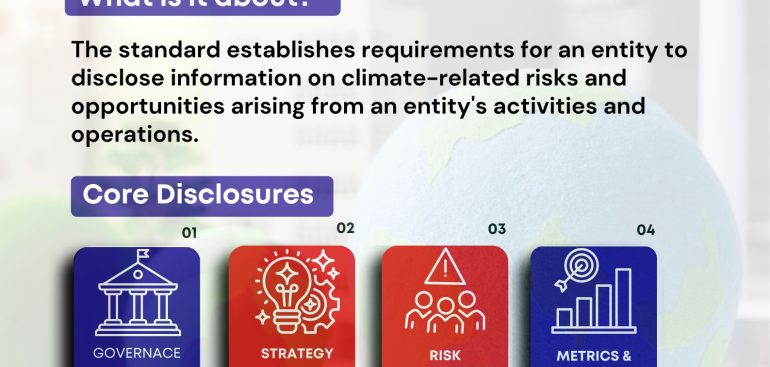
The standard sets out requirements for entities to disclose information on climate–related risks and opportunities arising from their activities and operations. It provides disclosures on governance, strategy, risk management, and metrics and targets.

The new standard comes at a time when climate change poses serious financial, operational, and service-delivery risks to the country. To protect citizens and manage public resources, the government is required to respond quickly to climate change in a structured and accountable manner, disclosing climate-related issues in its books of account. 

“The IPSASB SRS 1 requires public sector entities to report on how climate affects their operations. This standard will be effective globally on 1st January 2028, while in Kenya it will be effective on 1st July 2028; however, early adoption is permitted,” PSASB CEO, FCPA Georgina Muchai said. 

By applying the standard, public sector entities will be required to disclose their exposure to climate risks, including extreme weather, rising costs, and infrastructure damage, as well as any opportunities, such as renewable energy and climate-resilient investment. The entities will also be required to report on climate policies, projects, and programs, and on whether these are delivering results.

The disclosures are designed to improve decision-making and accountability. When climate information is consistent, comparable, and verifiable, parliament, auditors, donors, and the public can see how effectively public funds are spent to manage climate risk and support sustainable development. This also strengthens government credibility when seeking funding from development partners.

“Due to the unique nature of the Public Sector, the IPSASB is currently working on another standard to provide guidance for reporting on Public Policy Programs and their outcomes,” FCPA Georgina said.

PSASB is currently reviewing the standard and will offer training, guidelines, and reporting templates to help public sector entities comply.

IPSASB Issues New Standard – Tangible Natural Resources Held for Conservation

IPSAS 51

The International Public Sector Accounting Standards Board (IPSASB) has issued a new standard, IPSAS 51, on tangible natural resources held for conservation, to ensure that public sector entities worldwide can recognise the value of the resources they protect, making ‘invisible’ natural wealth visible to the public.

This standard will be effective globally on 1st January 2028, while in Kenya it will be effective on 1st July 2028; however, early adoption is permitted. The standard aims to provide transparency into how tangible natural resources held for conservation change over time and to reveal whether those resources are being restored or depleted. A tangible natural resource held for conservation is a naturally occurring tangible asset that is managed to prevent its degradation.

“The new global standard was developed because vital environmental assets, such as forests, water bodies, and national parks, have historically been omitted from financial statements due to a lack of standardized reporting guidance,” PSASB CEO, FCPA Georgina Muchai said.

The new standard provides a standardized guide for public-sector entities to recognize and report tangible natural resources, specifically when they are held for conservation purposes. This ensures that environmental resources move from mere disclosure to recognition and measurement for inclusion in the financial statements.  By taking stock of natural resources, transparency is achieved through evidence-based data that reveal how their value changes over time. This ensures proper maintenance of the resources to avoid depletion and degradation and provides a clearer picture of the government’s true wealth.

PSASB Invites Comments on Annual Financial Reporting Templates

Advert

The Public Sector Accounting Standards Board (PSASB) is reviewing the existing annual financial reporting templates and invites all stakeholders to provide comments.

The annual financial reporting templates are designed to provide a standardized framework for financial reporting across all public sector entities. The templates aim to standardize reporting processes, improve the accuracy of financial information, and enhance compliance with the Public Finance Management Act (PFMA), 2012, and other relevant reporting requirements. Stakeholder engagement is a key part of the template development and review process.

PSASB stakeholders, including preparers of financial statements, auditors, professional bodies, civil society organizations, and members of the public with an interest in public sector financial management, are invited to review the templates and provide feedback. The input will be reviewed and incorporated into the existing templates to improve their effectiveness across all public sector entities.

“Public participation is part of our commitment to improving financial reporting across Kenya’s public sector, enhancing transparency and accountability in the preparation of annual financial statements. Our templates are user-friendly and aligned with international best practices,” PSASB CEO, FCPA Georgina Muchai said.

The templates can be accessed and downloaded from PSASB’s official website: https://www.psasb.go.ke/financial-reporting-templates. Detailed instructions for submitting comments are provided in the official advertisement published in on Tuesday 17th February 2026 on MyGov pullout: https://www.mygov.go.ke/sites/default/files/2026-02/MyGov%20February%2017%2C%202026.pdf